The Times are a-Changing
By Bob Hitchens
As little as five or six years ago, when solar feed-in tariffs were around $0.20 per kWh, installing a solar system had the potential to reduce power bills to close to or better than zero, over the course of a year.
As the feed-in tariffs got lower, the ability to do this disappeared, and interest in battery addition suddenly became the major considerattion, so that the (all but valueless) surplus energy generated by the solar system could be used to fill a battery, which then discharged once the sun went down and provided enough energy to see you through the night.
With this scenario, the cost of the electricity component of the bill could be eliminated; however, funds are still needed to pay for the daily supply charge (currently around $500-$800 per annum). There is usually always some surplus “daytime” solar energy sent back to the grid each day (particularly in the summer months), even when there is a battery. While the Feed-in Tariff was moderately high (10c – 12c /kWh), the income generated could have a reasonable impact on this component of the power bill.
The advent of Virtual Power Plants (VPPs) gave rise to the ability to provide surplus battery energy to the grid, when the demand and thus, subsequently, the prices paid for this battery energy were high. VPPs had the potential to generate significant funds in the early days of adoption, in particular when the grid had issues and prices paid for surplus battery energy sent to the grid were in dollars per kWh rather than cents.
In July 2025, the Federal Battery incentive appeared on the scene, and the number of batteries installed in residential properties increased exponentially, and at the time of writing, still going strong. The value of the Feed-in tariff offered by most energy retailers also fell in July 2025. Feed-in Tariffs ranging from zero to four or five cents were now common across the board. Given that summer outputs of solar energy are around double that of winter production, most solar systems have a surplus of energy available that is now worth very little. This has prompted the installation of larger batteries to ensure that the excess solar energy produced can be stored and sold back to the grid via the VPP system.
The Trend
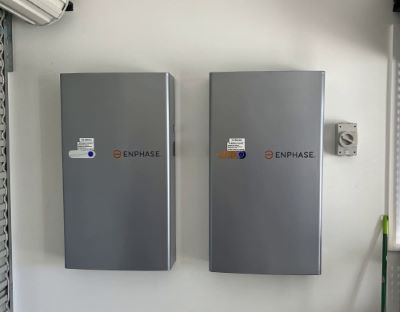
The VPP I have chosen to use is AMBER, and to date, I believe it has been the best option for my solar system and battery (6.05 kW Enphase system with Powerwall 2 battery). The data following is from my system rather than an industry average. The graphs following indicate to me that the huge uptake of battery installations since July 2025 has had the desired effect of making the grid more stable. The number of “spike” events has decreased considerably, as well as the value of the “spikes” themselves.

Given that the “Honeymoon” period of big price spikes is probably over, I have had several people contact me asking whether being with a VPP is still worth it. That has prompted me to look at what would have happened had I not been with a VPP.
Looking at just the income from energy sent to the grid in daylight hours (7.00 am to 5.00 pm) and applying (a generous) 5c as the Feed-in Tariff, I would have earned only $0.63 per day ($230 per annum)– compared to the actual earnings of $3.23 per day. ($1179 per annum).

AMBER uses wholesale pricing (generally around half of the retail prices available) for any energy purchased from the grid, which in conjunction with the income-generating potential, certainly still seems worthwhile being with a VPP.
What of the future?
At the time of writing, more changes are likely to have an effect on the choices we have as customers. The offering of free power in the middle of the day is starting to be available, as will be penalties for surplus solar going to the grid in the middle of the day. AMBER already has this sorted with the use of Curtailment – solar generation is ramped down when the price of energy fed to the grid goes negative (ie at a cost).
There has been talk of daily supply charges being increased in the future – making the use of a VPP option even more pertinent.
Watch this space……
“At SolarWise Wagga our philosophy is simple, we aim to provide relevant and reliable information, quality service, and the highest grade of products at a competitive price.”
Want More Info?
If you would like more information about solar power and batteries, or would like a consultation & quote, give us a call or enter your details in the enquiry form below.